
Case study · Earthworks
From take-off to site: sports pitch earthworks near Beaconsfield
How the tender measure became the ground on site, and why every cubic metre was priced before a machine arrived.
24,256 m²
of sports pitches
5 m+
fall across the site
7,145 m³
of fill needed
1,028 m³
imported, priced at tender
The project
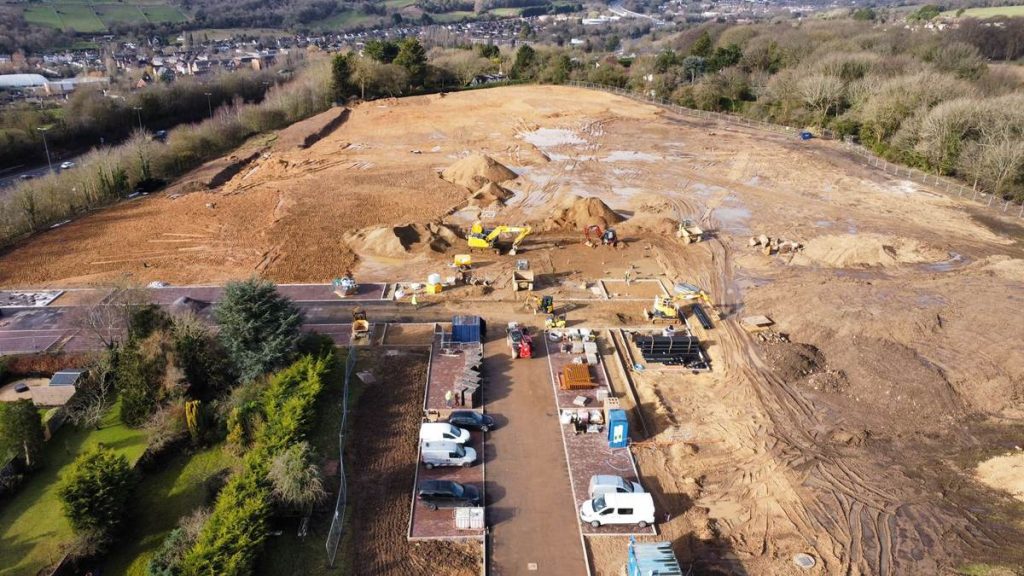
New sports pitches on a hillside near Beaconsfield, with a tarmac access road, permeable block parking, paths, a pavilion base, drainage and a soakaway tank. The ground falls by over 5 metres across the site, so the earthworks were the biggest pricing risk in the tender.
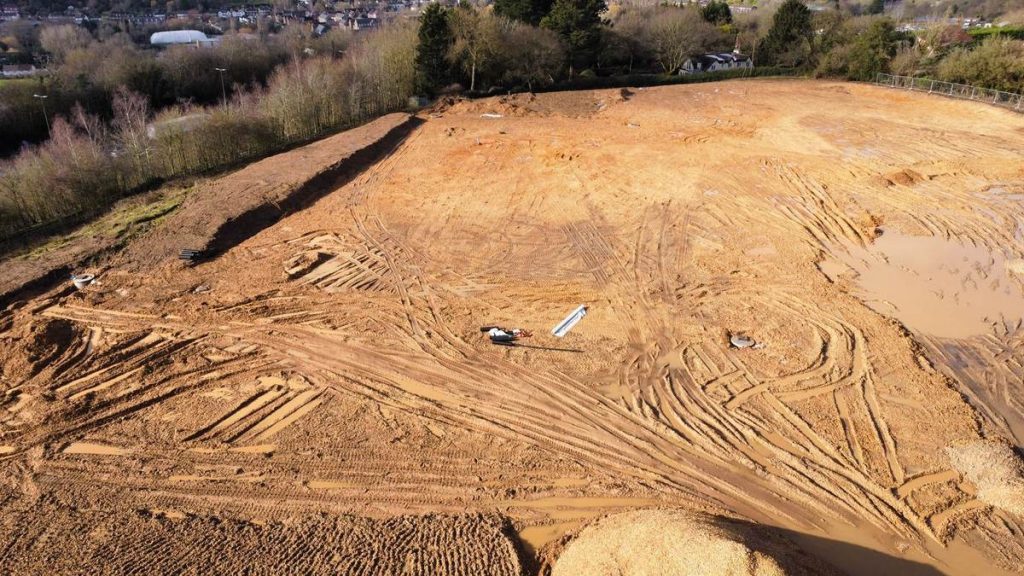
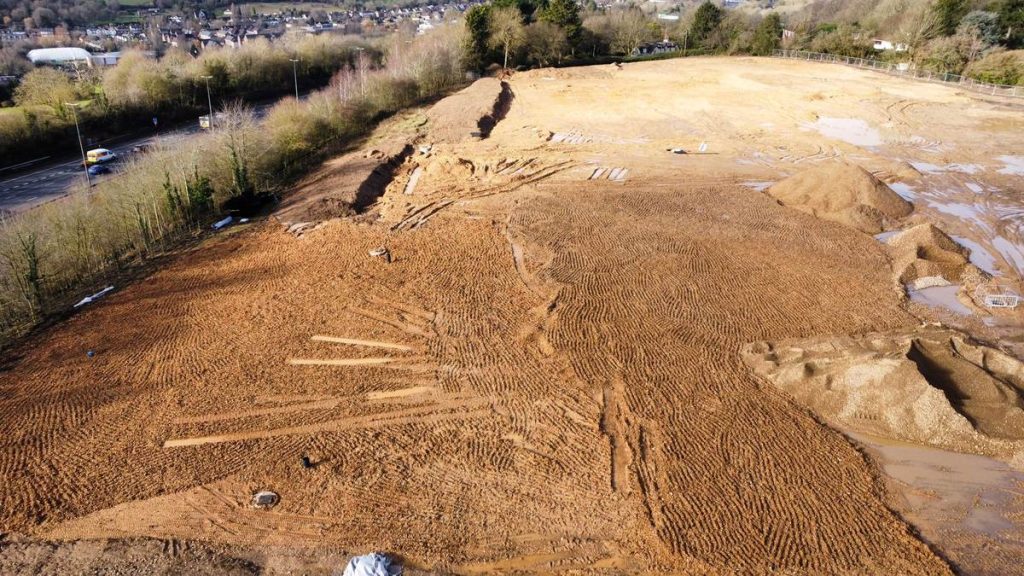
Onyx measured and modelled the whole scheme at tender stage. The drone photos below show how that tender model compared with the ground once work started on site.
Step 1 · Bluebeam Revu
Measure every area and length
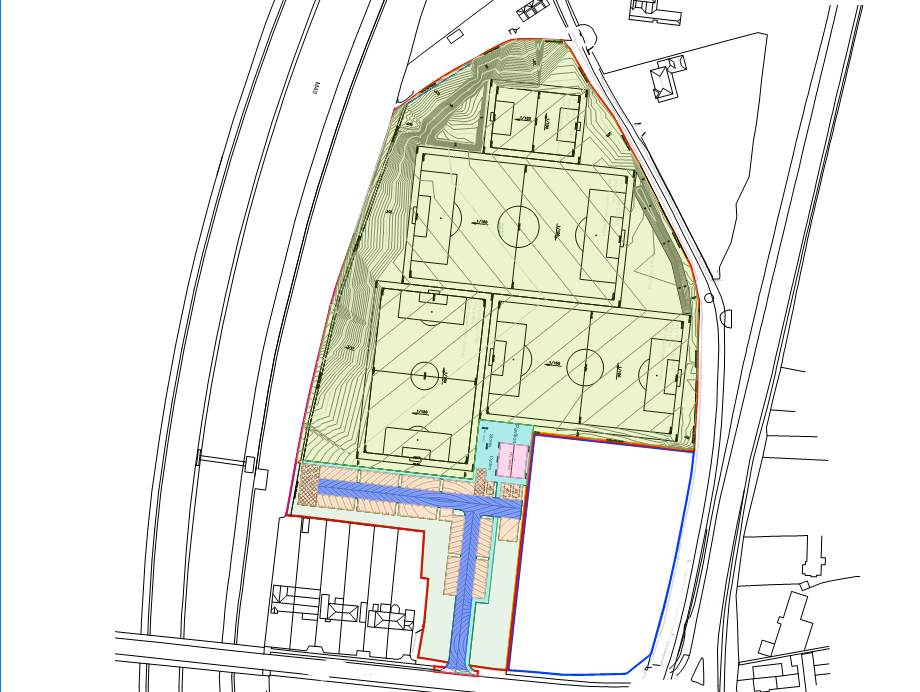
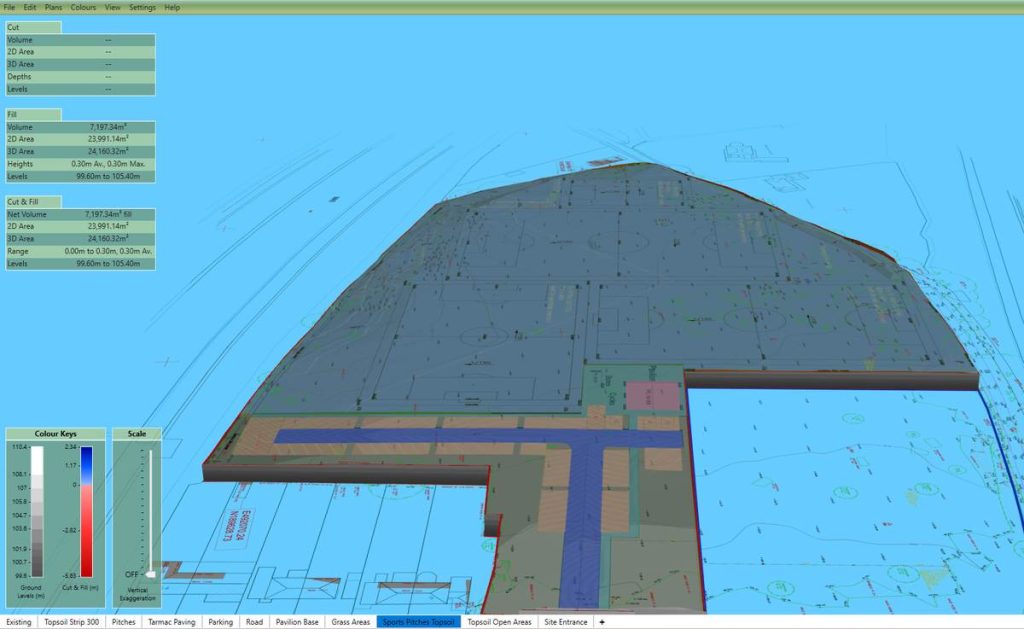
Every surface was measured in Bluebeam Revu: pitches, tarmac road, permeable block parking, paths, pavilion base, grass and topsoil areas. Each one gets its own colour, so nothing is missed before pricing starts.
Step 2 · Survey to 3D model
Model the ground as it is today
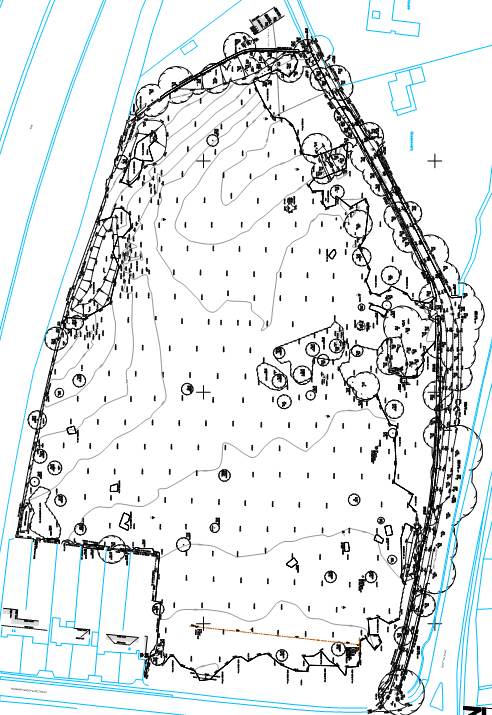
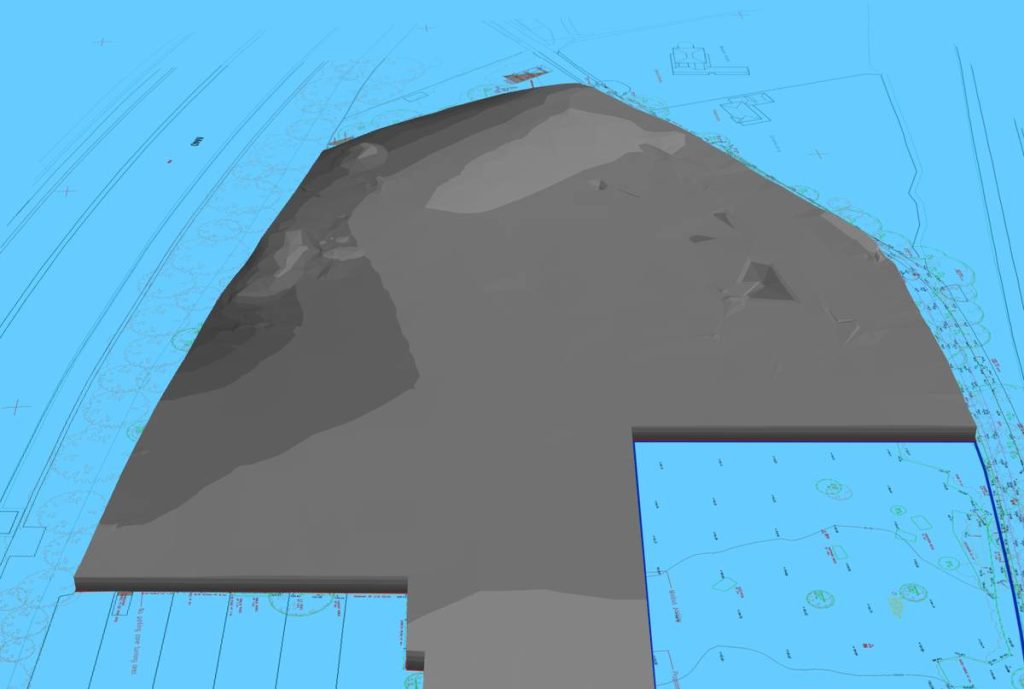
The original survey’s spot levels and contours were built into a 3D model in Kubla Cubed. On a hillside that falls by over 5 metres, guessing the earthworks was never an option.
Plan vs reality
The pitches: topsoil strip
At tender, 7,277 m³ of topsoil was measured over 24,256 m² of pitches at 300 mm depth. On site, 8,850 m³ was stripped and screened, and the 958 m³ surplus went into the fill. Nothing wasted.
Step 3 · Cut and fill
Know the earthworks before you price them
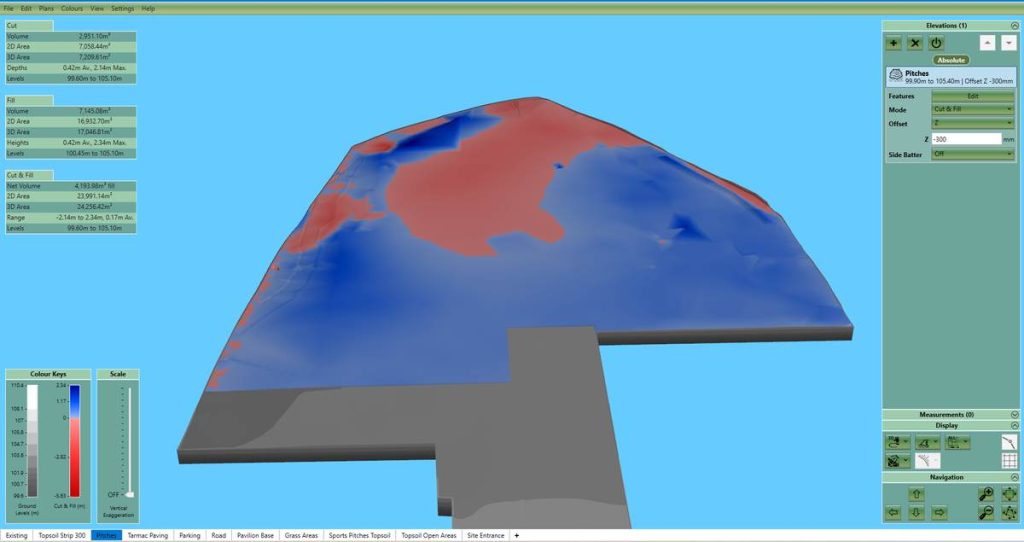
The cut and fill was modelled to the pitch design levels. Red is cut, blue is fill.
| Pitches earthworks | Volume (m³) |
|---|---|
| Cut | 2,951 |
| Fill | 7,145 |
| Net fill | 4,194 |
Plan vs reality
The road and parking
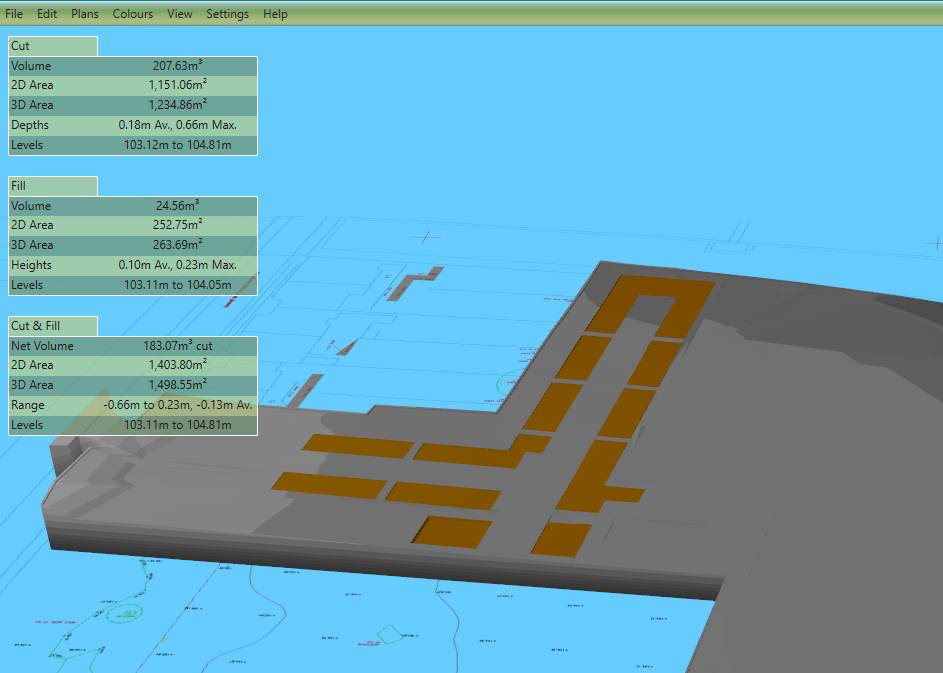
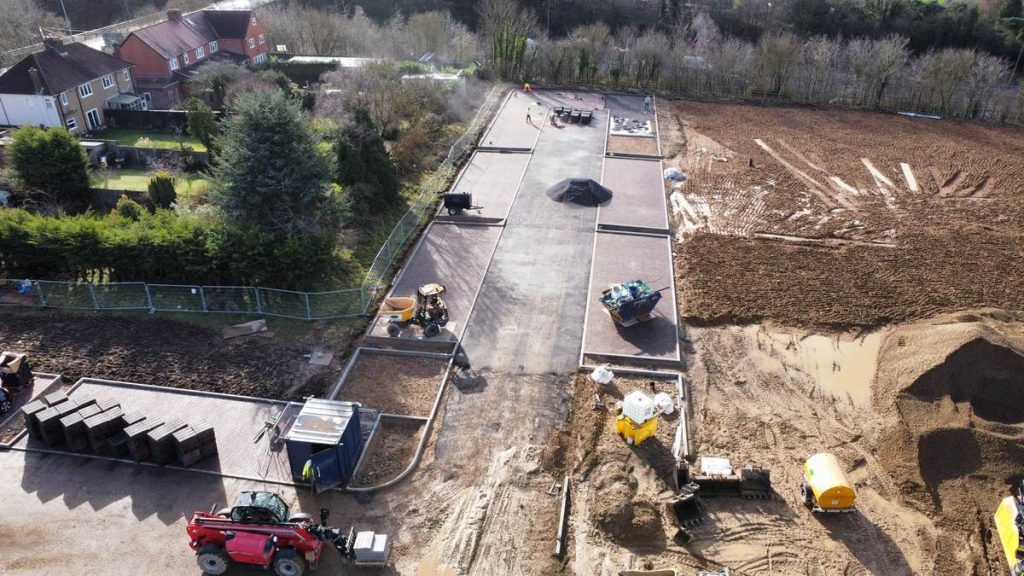
Each parking bay was modelled as its own layer at tender: 207 m³ cut and 25 m³ fill. Below, the road and permeable block bays going in.
The muck balance
Every cubic metre accounted for
The pitches needed 7,145 m³ of fill. This is where it came from, package by package.
| Source of fill | Volume (m³) |
|---|---|
| Pitches cut | 2,952 |
| Surplus topsoil | 958 |
| Pitch drainage | 676 |
| Soakaway tank | 613 |
| Road | 337 |
| Entrance grass area | 263 |
| Parking | 208 |
| Paths, pavilion and road drains | 110 |
| Sourced off site | 1,028 |
| Total fill needed | 7,145 |
All figures from the priced BOQ, built on the Kubla Cubed cut and fill.
Why it matters
Found at tender, it’s in the price. Found on site, it comes out of the margin.
- Every area, length and volume was measured before a machine arrived on site.
- The model showed the pitches needed 4,194 m³ more fill than cut.
- Some came from other works on site: drainage, attenuation, road and parking, using volumes from the same cut and fill.
- That still left 1,028 m³ to be sourced from off site, and it was priced from day one.
- Accurate quantities mean a tender that’s competitive and still makes money.
Pricing a groundworks tender?
Take-offs in Bluebeam Revu, cut and fill in Kubla Cubed, and full Bills of Quantities and pricing. Send us the drawings and we’ll tell you what’s involved.